📋 KEY TAKEAWAYS
- Birthing centers are designed to feel like home, not a hospital, and the bed is one of the first things a mother notices when she walks into the room.
- A traditional hospital bed communicates clinical authority. A well-designed adjustable bed communicates comfort, care, and calm, and that distinction matters to the mothers choosing your facility.
- The Flexabed Hi-Low delivers the adjustability and caregiver accessibility that staff need, on a luxury home mattress that looks nothing like medical equipment.
- One birthing center recently ordered the Flexabed Hi-Low specifically because they were looking for something that felt premium, a detail that speaks to where the market is heading.
- Browse the Flexabed Adjustable Beds collection to see the full range.
Featured Product:
Bottom Line: The bed in your birthing room is not just equipment. It is part of the experience mothers remember.
The Room Tells the Story Before Anyone Speaks
A mother walks into a birthing center room for the first time and takes it all in before the midwife says a word. The lighting. The textures. The furniture. Whether the space feels like somewhere she wants to give birth or somewhere she has to.
The bed sits at the center of that first impression.
A standard hospital bed with chrome rails, a thin institutional mattress, and a clinical crank frame communicates something immediate: this is a medical environment. That framing is appropriate in a hospital. In a birthing center whose entire model is built around warmth, privacy, and a homelike birth experience, it creates a disconnect that is hard to overcome with anything else in the room.
Birthing centers have invested in thoughtful lighting, warm color schemes, birth tubs, and carefully chosen furniture, and then placed a standard hospital bed in the middle of it. The bed undercuts everything else.
What Mothers Are Actually Choosing When They Choose a Birthing Center
The decision to give birth at a birthing center rather than a hospital is rarely just logistical. It is a statement about the kind of experience a mother wants.
Research published in Frontiers in Global Women's Health confirms that birthing environments significantly influence birth experiences, with homelike settings fostering feelings of ease, confidence, and empowerment during labor. Birth centers with intimate, homelike environments are calming, fostering feelings of ease and empowerment during childbirth.
A PMC study on birthing room design found that reducing the "technocratic emphasis" of the birth environment, meaning the visible presence of clinical equipment and medical framing, is one of the key factors that improves the birth experience for women. Familiar features in the setting and reducing the technocratic emphasis in the environment were among the four themes identified as central to improving how women experience birth.
The bed is one of the most visible pieces of equipment in the room. Its appearance either reinforces the homelike environment the facility is trying to create, or it contradicts it.
The Problem with Traditional Hospital Beds in a Birthing Setting
Standard hospital beds were designed for clinical efficiency, not comfort or aesthetics. They are built to be cleaned quickly, adjusted by staff, and moved between rooms. The experience of being in one is secondary to the experience of caring for someone in one.
That design logic makes complete sense in an acute care environment. In a birthing center, it creates three problems.
Appearance. The chrome frames, visible mechanics, and institutional finishes of a standard hospital bed do not belong in a space designed to feel like home. Mothers notice. Their partners notice. It changes the emotional tenor of the room in a way that no amount of soft lighting can fully correct.
Mattress comfort. Standard hospital mattresses are thin, firm, and functional. They are not designed for the hours a laboring mother may spend in bed before and after delivery, or for the postpartum recovery period when sleep and rest are critically important.
The feeling of being a patient. There is a meaningful difference between a woman who feels cared for in a warm, personal environment and a woman who feels like a patient in a clinical one. The bed contributes to that feeling more than most facilities realize until they change it.
What Midwives and Staff Actually Need From a Bed
The counterargument to replacing hospital beds in a birthing center is always practical: staff need adjustability, caregivers need to access patients safely, and the bed needs to function during labor and recovery, not just look nice.
That concern is legitimate. And it is exactly what the Flexabed Hi-Low is built to address.
The hi-low function raises and lowers the entire bed platform from 11 inches from the floor up to 18.5 inches (with leg pads), or 13.25 to 20.75 inches with casters. At the low end, a mother can step out of bed easily and safely. At the high end, midwives and support staff can provide care, check positioning, and assist during and after labor without bending over a fixed-height surface.
The head raises to approximately 70 degrees, appropriate for pushing positions, postpartum feeding, and recovery rest. The foot elevates to approximately 40 degrees for comfort and circulation support. These are not afterthoughts. They are the same positional adjustments that clinical beds provide, on a bed that looks like it belongs in a home.
"We Were Looking for Something That Felt Premium"
 Installed in San Luis, AZ
A birthing center recently ordered the Flexabed Hi-Low SL specifically because they were looking for a bed that felt more premium than what they had been using. Not because their current beds lacked function, but because the function was no longer enough.
Their mothers were choosing their facility because of the experience it promised. The standard beds were not delivering on that promise visually, and the team felt it in how the rooms were received.
The Flexabed Hi-Low changed that. It gave them the height adjustability and positioning their staff needed, in a bed that looked like it had been chosen intentionally for the space, because it had.
That kind of alignment between environment and equipment is what separates a birthing center that mothers talk about from one they simply use.
The Flexabed Hi-Low SL: What It Offers a Birthing Center
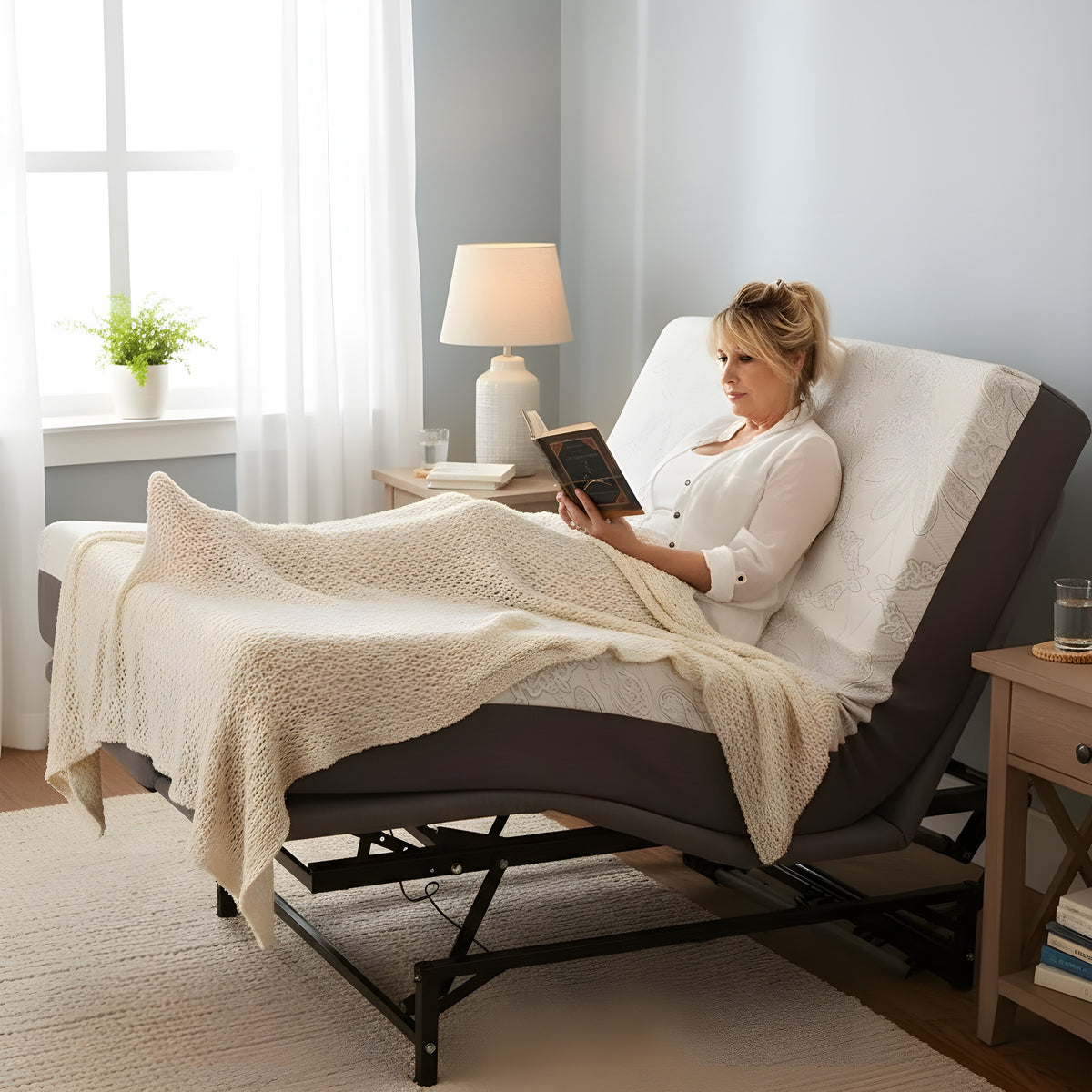
The Flexabed Hi-Low SL is a luxury hi-low adjustable bed designed for home care and senior living environments, but its combination of premium aesthetics, genuine adjustability, and a real home mattress makes it equally well-suited to birthing centers that want something better than a clinical bed.
It is available in Twin, Full, Queen, and Split King, with length options of 74, 80, and 84 inches. The frame carries a lifetime limited warranty on frame and mechanics, a level of warranty coverage unusual in this category.
For facilities, the bulk order discount applies on multiple units. Tax exemption is also available by phone.
The Flexabed Hi-Low SL: What It Offers a Birthing Center
The Flexabed Hi-Low SL is a luxury hi-low adjustable bed designed for home care and senior living environments, but its combination of premium aesthetics, genuine adjustability, and a real home mattress makes it equally well-suited to birthing centers that want something better than a clinical bed.
It is available in Twin, Full, Queen, and Split King, with length options of 74, 80, and 84 inches. The frame carries a lifetime limited warranty on frame and mechanics, a level of warranty coverage unusual in this category.
For facilities, the bulk order discount applies on multiple units. Tax exemption is also available by phone.
Key Specs: Flexabed Hi-Low SL
-
Height Range: 11" to 18.5" without mattress (leg pads); 13.25" to 20.75" with casters
-
Head Elevation: Approximately 70°
-
Foot Elevation: Approximately 40°
-
Weight Capacity: 400 lbs single occupant; 700 lbs split occupant (no single person over 400 lbs)
-
Sizes: Twin, Full, Queen, Split King
-
Length Options: 74", 80", 84"
-
Mattress Options: Traditional Innerspring (soft/medium/firm), Low Profile (5.5"), Gel Memory Foam, Innerspring/Memory Foam Combo
-
Smart Features (wireless remote option): Underbed lighting, massage, voice activation, USB and wireless phone charging, Bluetooth connectivity
-
Side Rails: Factory-installed mounting plates for optional side rails
-
Warranty: Lifetime limited on frame and mechanics
-
Bulk Orders: 10%+ discount available, call 833-499-4450
What it offers staff: Full hi-low height adjustment for caregiver access, head and foot positioning for labor and recovery, optional side rails when needed.
What it offers mothers: A real home mattress, a bed that looks like furniture, and the feeling of being in a space that was designed for her, not just configured for her care.
See Price & Details
4 Ways the Flexabed Hi-Low Compares to a Standard Hospital Bed in a Birthing Setting
1. Appearance
A standard hospital bed has visible mechanical components, chrome rails, and institutional finishes. The Flexabed Hi-Low is designed to look like high-quality bedroom furniture. In a room built around warmth and comfort, that visual difference is not cosmetic, it is foundational to the experience.
2. Mattress Quality
Standard hospital mattresses are thin, firm, and designed for easy cleaning. The Flexabed Hi-Low pairs with a genuine residential mattress, gel memory foam, innerspring, or combo, that is thicker, softer, and meaningfully more comfortable for a mother spending hours in bed during labor and recovery.
3. Height Adjustability
Both bed types offer hi-low adjustment. The Flexabed Hi-Low descends to 11 inches from the floor for easy entry and exit, and raises to 18.5 inches for caregiver access. This functional range covers the practical needs of a birthing center without requiring a clinical-grade frame to do it.
4. Postpartum Recovery Comfort
After delivery, a mother may spend anywhere from a few hours to a full day in the birth room resting, feeding, and beginning recovery. The quality of the mattress and the comfort of the bed's head and foot positions make a real difference during those hours. The Flexabed Hi-Low is built for extended rest, not just short-term clinical use.
Frequently Asked Questions
Can the Flexabed Hi-Low be used in a commercial birthing center setting?
Yes. Flexabed offers bulk order pricing for facilities ordering multiple units. A 10% or greater discount is available on bulk orders, call 833-499-4450 or inquire about tax exemption.
Does it provide the same height adjustability as a hospital bed?
It provides full hi-low adjustment from 11 inches (leg pads, no mattress) to 18.5 inches raised. This range covers the practical requirements for caregiver access, labor support, and safe patient entry and exit.
What mattress options are available?
Traditional Innerspring in soft, medium, or firm; Low Profile (5.5"); Gel Memory Foam; and an Innerspring/Memory Foam Combo. All are approximately 10 inches except the Low Profile at 5.5 inches.
Are side rails available?
Yes. Factory-installed mounting plates for optional side rails are included on the frame. Rails can be added as needed.
What is the weight capacity?
400 lbs for a single occupant. 700 lbs in split occupant configuration (no single person over 400 lbs).
What is the warranty?
A lifetime limited warranty on the frame and mechanics, one of the strongest warranty terms available on any adjustable bed in this category.
Does the Flexabed Hi-Low come in different sizes?
Yes. Twin, Full, Queen, and Split King, in lengths of 74, 80, and 84 inches.


