📋 KEY TAKEAWAYS
-
Yes, ALS discomfort is often worse at night, not because ALS itself is painful, but because the secondary effects of the disease (immobility, muscle cramps, pressure points, and breathing changes) have nowhere to hide when distractions disappear and the body stays in one position for hours.
-
ALS is not a pain condition, but muscle cramps, sustained pressure at bony prominences, and breathing difficulties during sleep are extremely common and frequently disrupt sleep quality.
-
Muscle cramps often worsen at night and interrupted sleep in 50% of ALS patients who reported them in a published clinical study.
-
Immobility is the core problem, when a person cannot shift position, pressure accumulates at the same points all night. A pressure redistribution mattress addresses this passively, without requiring patient or caregiver intervention.
-
Practical solutions exist before any equipment is needed: repositioning schedules, leg warmth before bed, head elevation, and reduced bedding friction all help.
- Browse the Rotating Bed for ALS collection and the Prius Healthcare USA mattress collection for equipment matched to each stage of ALS.
Top Picks:
Bottom Line: Nighttime discomfort in ALS is real, common, and not inevitable. The right equipment makes sleep meaningfully more comfortable for both the patient and the caregiver.
Is ALS Pain Worse at Night?
The short answer is: for many people, yes, but not for the reason most assume.
ALS itself is not a painful disease in the way cancer or arthritis is painful. The motor neurons that ALS affects are responsible for movement, not sensation. Most people with ALS retain their ability to feel, which means they are fully aware of every discomfort that comes with immobility, positioning, muscle cramping, and breathing difficulty, but those symptoms come from the secondary effects of the disease, not the disease itself.
Sleep disruption in ALS can be caused by physical symptoms including muscle cramps, pain, reduced mobility, spasticity, mucus retention, and restless legs syndrome, as well as depression and anxiety, which may lead to significant insomnia.
Nighttime strips away the distractions that make daytime tolerable. There is no conversation to focus on, no activity to shift attention, no caregiver nearby to help reposition. The body stays in the same position for hours, and every point of pressure becomes more noticeable the longer it persists.
Understanding what specifically drives nighttime discomfort helps identify which interventions will actually help.
5 Reasons ALS Discomfort Feels Worse at Night
1. Muscle Cramps That Worsen After Dark
Muscle cramps are one of the most consistently reported sources of pain in ALS, and they have a documented tendency to worsen at night.
At baseline, 78% of ALS patients in one study reported cramps, and cramps interrupted sleep in 50% of those who experienced them. Most described cramp pain as moderate or severe. Cramps were most commonly reported in the calf and thigh, followed by the hand and foot.
When a person is resting in bed, the legs are still and the muscles cool. Reduced circulation during prolonged stillness and the absence of movement that would otherwise stretch and activate muscle tissue creates the conditions where cramping is most likely. Repositioning the legs, maintaining warmth, and using bedding that does not restrict movement can help, but the underlying cause is neurological and benefits from discussion with the care team.
2. Immobility and Inability to Reposition
A healthy sleeper shifts position an average of 20 to 40 times per night without waking. Most people with ALS gradually lose the ability to make these involuntary adjustments.
Nocturnal pain in patients with ALS may directly result from immobilization and inability to change position in bed. Muscle atrophy may enhance pressure load to bones and joints.
When the body cannot redistribute its own weight, pressure concentrates at bony prominences, the heels, sacrum, hips, shoulders, and back of the head. Without movement, that pressure accumulates through the night rather than being naturally redistributed. By morning, what began as mild discomfort has built into significant pain.
This is the mechanism that makes pressure redistribution mattresses clinically meaningful rather than optional comfort upgrades for people with ALS.
3. Pressure Points and Skin Integrity
As muscle mass decreases over the course of ALS, there is less natural padding between bones and the mattress surface. Bony prominences become more prominent, and the skin over them becomes more vulnerable to breakdown under sustained pressure.
A standard household mattress is not designed for patients who remain in one position for hours. It creates localized pressure that restricts blood flow to the skin, and given enough time at sufficient pressure, that restriction leads to pressure injury.
For ALS patients and their caregivers, pressure injury prevention is not a minor comfort concern. It is an active quality-of-life issue that affects sleep, skin integrity, pain levels, and care burden simultaneously.
4. Breathing Changes During Sleep
Patients with ALS cannot turn around in bed, and many have difficulties falling or staying asleep because of muscle cramps and restless legs. Respiratory muscle weakness is the most important condition that may disturb sleep, because it leads to shallow breathing during the night and accumulation of carbon dioxide in the blood.
When respiratory muscles weaken, the body's ability to breathe deeply during sleep is compromised. The accumulation of carbon dioxide during the night can cause awakening, headaches, anxiety, and a pervasive sense of breathlessness that is difficult to distinguish from pain. Elevation of the head of the bed is one practical intervention that reduces the effort required to breathe while lying down, not a substitute for clinical respiratory management, but a meaningful complement to it.
5. Anxiety and Psychological Factors
Psychological factors such as depression and anxiety may lead to significant insomnia in ALS patients.
Nighttime brings a particular kind of vulnerability. The absence of activity and distraction creates space for fear, grief, and awareness of disease progression in a way that daytime activity suppresses. For many patients and caregivers alike, the hours between midnight and dawn are the hardest emotionally, not just physically.
This dimension of nighttime distress is real and deserves acknowledgment alongside the physical interventions. Palliative care teams, ALS social workers, and mental health professionals who specialize in chronic and terminal illness are resources specifically designed for this.
The ALS Association and the ALS News Today resource library both maintain caregiver and patient support resources that address the psychological dimensions of living with ALS.
Practical Solutions Before Products
Before any equipment purchase, there are several low-cost or no-cost interventions worth implementing first.
Repositioning schedule. A structured repositioning schedule every two hours reduces pressure accumulation at bony prominences. If the patient cannot reposition independently, caregivers can use a draw sheet, repositioning wedge, or turning system to assist. This is the most effective single intervention for pressure-related nighttime discomfort.
Warm the legs before bed. For patients prone to leg cramping, gentle passive stretching before sleep and ensuring the legs are warm (not hot) can reduce cramp frequency. This is a simple, free intervention that many families find genuinely helpful.
Elevate the head. Even mild elevation of the head of the bed, 15 to 30 degrees, reduces the effort required for breathing during sleep and can meaningfully improve respiratory comfort. A hospital bed with powered head elevation makes this adjustable throughout the night without physical effort.
Reduce bedding friction. Standard cotton sheets create friction that makes repositioning harder and increases skin shear. Satin-finish or microfiber sheets reduce this resistance and make caregiver repositioning easier on both parties.
Address the environment. Room temperature, noise, and light levels all affect sleep quality. For patients who cannot regulate their own environment, a cooler, darker, quieter room generally supports better sleep.
Talk to the care team. Muscle cramps, spasticity, restless legs, and breathing difficulties in ALS all have clinical management options. Medications, non-invasive ventilation (NIV), and other interventions prescribed by the neurologist or palliative care team address the root causes that equipment alone cannot reach. The National Institute of Neurological Disorders and Stroke maintains current information on ALS symptom management that caregivers and patients can bring to medical appointments.
How the Right Sleep Setup Helps
Equipment addresses what repositioning schedules and clinical management cannot fully solve: the quality of the surface the patient is sleeping on, and the ease with which position adjustments can be made.
Adjustable Beds and Head Elevation
A hospital bed with powered head and foot elevation allows the patient and caregiver to adjust sleeping position without physical effort. For ALS patients, this matters in several specific ways.
Head elevation supports breathing and can be adjusted throughout the night as respiratory needs shift. Foot elevation reduces edema and improves circulation in the lower limbs. Hi-low height adjustment allows the bed to lower close to the floor at night (reducing fall risk during any assisted transfers) and raise to caregiver working height during care tasks.
For a full guide to bed selection for ALS patients at different stages, see our detailed resource: ALS Sleep Comfort: Bed and Mattress Solutions.
Pressure Redistribution Mattresses
A pressure redistribution mattress addresses the specific problem of sustained pressure at bony prominences during periods of immobility. Three levels of intervention match three stages of need.
Mattress Options by ALS Stage

1.Prius Ultra Convertible, Best for Early-Stage ALS
In the early stages of ALS, patients retain some mobility and may not yet have pressure injuries. The priority is preventing skin breakdown before it starts, and doing so passively, without requiring patient or caregiver intervention during the night.
The Prius Ultra Convertible does this through a self-adjusting integrated chamber system that constantly migrates air throughout the mattress, automatically responding to the patient's weight, shape, and movement without any manual adjustment. The Serene foam topper provides maximum immersion for high-risk patients, and the multi-layer heel section specifically offloads the heel, one of the highest-risk areas for pressure injury in immobile patients.
The powered alternating pressure control unit is included for situations where passive redistribution needs to be elevated to active therapeutic support. The micro-climate top cover manages moisture and reduces friction and shear across the entire sleep surface.
As ALS progresses and mobility decreases further, the catalog note is direct: for more advanced stages or where pressure sores are present, consider upgrading to the Prius Rhythm Multi Plus or the Prius Century Gold.
Key Specs: Prius Ultra Convertible
-
Dimensions: 36"W x 80"L x 7"H
-
Weight Capacity: 600 lbs (up to 1,000 lbs in wider bariatric configurations)
-
Zone System: 4-zone (Head, Shoulder, Torso, Foot)
-
Topper: Serene foam topper
-
Heel Section: Multi-layer foam for heel offloading
-
Cover: Micro-climate, vapor-permeable, fluid-proof, low-friction 4-way stretch
-
Includes: Powered alternating pressure control unit
-
Compliance: Federal Standard 16 CFR 1633
-
Warranty: 1-year pump, 5-year mattress
-
Item Numbers: System: PHR-CHM36 | Mattress: FM-PHRCHM3680 | Pump: FC-PHR0052 | Hose: PM-PHR0335
GET THIS IF your loved one is in the early stages of ALS with decreasing mobility and you want a self-adjusting mattress that works passively through the night to reduce pressure injury risk, with no manual adjustment required
See Price & Details

2.Prius Rhythm Multi Plus, Best for Advanced Stage or if Pressure Sores Are Present
When ALS has progressed to a stage where the patient is largely or fully immobile, or when Stage 1 through Stage 4 pressure injuries are already present, the Rhythm Multi Plus is the appropriate upgrade. It provides active, powered alternating pressure therapy rather than passive redistribution, a clinical distinction that matters for patients at higher risk.
The 18-cell system operates in four therapy modes: Static, Pulsation, True Low Air Loss, and 3-1 Alternation. Fowler detection automatically adjusts air cell pressure when the head of the bed is elevated, preventing bottoming out during the elevated positioning that respiratory management often requires. Happy Heel protection offers three selectable softness settings for fragile skin at the heel.
Auto Firm mode inflates the mattress to full firmness for safe patient transfers and caregiver access, then returns to therapeutic settings automatically, reducing the manual setup required every time a care task is performed.
Key Specs: Prius Rhythm Multi Plus
-
Dimensions: 80"L x 36"W x 8"H
-
Weight: 28.6 lbs
-
Weight Capacity: 500 lbs
-
Cell Material: Black Nylon with PU Coating
-
Cell Number: 18 cells
-
Therapy Modes: Static, Pulsation, True Low Air Loss, 3-1 Alternation
-
Comfort Settings: 8 digital adjustable levels
-
Cycle Time: 3 to 95 minutes
-
Pressure Range: 15 to 52 mmHg ±4 mmHg
-
Features: Fowler detection, Auto Firm mode, Happy Heel (3 softness settings), CPR Quick Release, universal hanging bracket, cable management, visual and audio power failure alarm
-
Base: 2" convoluted foam for power failure support
-
Cover: Blue Nylon with PU coating
GET THIS IF your loved one has advanced to significant immobility, or if pressure sores at any stage are already present and active therapeutic pressure redistribution is needed through the night.
See Price & Details
3.Prius Century Gold, Best for Advanced Stage with Active Wound Care Needs
The Century Gold is the highest-acuity option in the Prius ALS mattress progression. It is specifically identified in the product catalog as clinically appropriate for advanced-stage ALS patients, particularly those who have already developed Stage 1 through Stage 4 pressure sores.
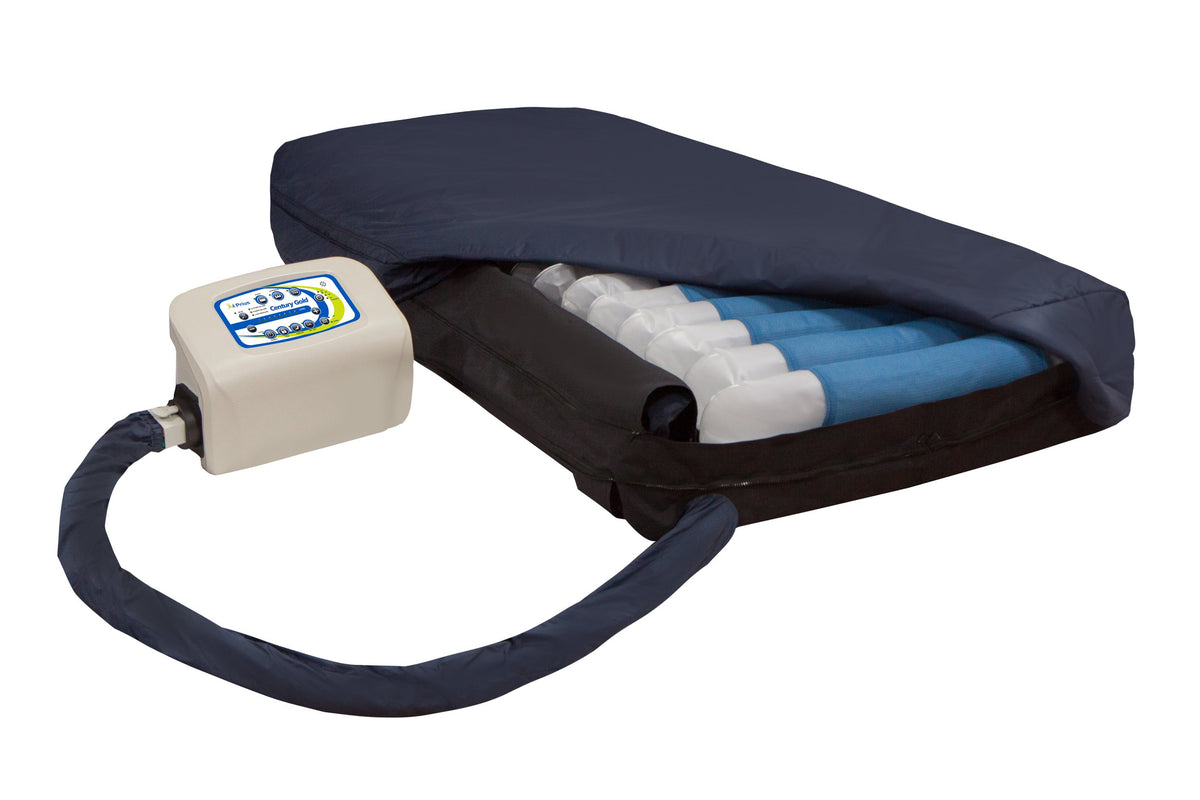
The 21-cell Clear TPU system operates in a 2-in-1 alternating therapy mode with On Demand True Low Air Loss, simultaneously redistributing weight and actively managing moisture, addressing both primary causes of pressure injury development in a single system. On-demand air-filled side rails can be raised or deflated for patient ingress and egress, reducing fall risk during transfers.
The CPR Quick Release system deflates the entire mattress in under 20 seconds for emergency access. Power outage protection keeps air cells inflated during power failures, a practical safety feature for home care environments. The HCPCS code E0277 may support insurance reimbursement inquiries; MedShopDirect does not bill Medicare or insurance directly.
Key Specs: Prius Century Gold
-
Dimensions: 80"L x 36"W x 10"H
-
Weight: 25.3 lbs
-
Weight Capacity: 500 lbs
-
Cell Material: Clear TPU
-
Cell Number: 21 cells
-
Cycle Time: 10, 15, 20, or 30 minutes; static function; 2-in-1 alternation mode
-
Pressure Range: 15 to 50 mmHg ±6 mmHg
-
Features: Fowler Mode, On-demand air-filled side rails, CPR Quick Release under 20 seconds, power outage protection, interchangeable cells, cable management, visual and audio alarms (Low Pressure, Power Failure, System Failure)
-
Control Unit: 15.5"L x 7.5"W x 9.5"H, 14.5 lbs, 110-240V, 60Hz
-
HCPCS Code: E0277
-
Cover: Blue Nylon with PU coating
GET THIS IF your loved one has advanced ALS with existing pressure sores at any stage, or requires the highest level of active wound care support in a home or long-term care environment.
See Price & Details
A Note on When to Seek Clinical Support
The equipment and strategies in this article are comfort support tools. They address the environmental and positional dimensions of ALS nighttime discomfort. They are not a substitute for clinical management of muscle cramps, spasticity, respiratory symptoms, or pain.
If nighttime symptoms are significantly disrupting sleep, particularly if breathing discomfort, severe cramping, or pain is involved, those symptoms belong in a conversation with the ALS neurologist or palliative care team. Non-invasive ventilation (NIV), medication adjustments, and other clinical interventions can meaningfully change the nighttime experience in ways that no mattress or bed position can replicate.
The ALS Association's care resources page provides guidance on building a multidisciplinary ALS care team and what to ask at each stage of the disease.
Frequently Asked Questions
Is ALS painful at night?
ALS itself does not cause pain in the direct sense, it is a motor neuron disease, not a pain condition. But the secondary effects of ALS, particularly immobility, muscle cramps, pressure points, and breathing changes, frequently cause significant discomfort that tends to worsen at night when distraction is reduced and the body stays in one position for extended periods.
Why do muscle cramps get worse at night with ALS?
Muscle cramps in ALS are associated with prolonged stillness, reduced circulation, and muscle cooling during rest. Research published in PMC found that cramps interrupted sleep in 50% of ALS patients who reported them, and most described cramp pain as moderate to severe. Warmth, passive stretching before bed, and discussion with the care team about clinical management options can all help.
How does immobility cause pain in ALS?
When a person cannot shift position during sleep, pressure concentrates at bony prominences. As ALS progresses and muscle mass decreases, there is less natural cushioning between bones and the mattress. Sustained pressure restricts blood flow to the skin and underlying tissue, causing discomfort that accumulates through the night.
Can a pressure relief mattress reduce ALS nighttime pain?
A pressure redistribution mattress addresses one specific cause of nighttime discomfort: sustained pressure at bony prominences during immobility. It will not eliminate muscle cramps or breathing difficulties, but it meaningfully reduces the skin and joint discomfort that comes from prolonged pressure at the same points throughout the night.
Which Prius mattress is right for my ALS stage?
The Ultra Convertible is designed for early-stage ALS where passive pressure redistribution is the goal. The Rhythm Multi Plus and Century Gold are designed for advanced stages where active alternating pressure therapy and wound care support are needed. When pressure sores are already present, the Rhythm Multi Plus or Century Gold is the appropriate choice.
What ALS sleep solutions are available beyond mattresses?
Hospital beds with powered head and foot elevation, rotating beds that assist with turning, positioning wedges, and caregiver-operated repositioning systems all address different dimensions of ALS nighttime comfort. For a comprehensive overview, see our detailed guide: ALS Sleep Comfort: Bed and Mattress Solutions.


