📋 Key Takeaways
- Staring at a wall of specs (turning radius, battery range, weight capacity) when you just need to know which chair will actually work in your home is exhausting, and you're not the only one who finds it confusing.
-
How to choose a power chair comes down to one question first: where will you use it most. Everything else, from turning radius to battery range, follows from that answer.
- Compare every option in our Power Wheelchairs collection, or jump to our top picks below:
Bottom Line: There's no single best power wheelchair. There's only the best power wheelchair for your specific mix of indoor space, outdoor terrain, transport needs, and body size.
How to Choose a Power Chair: Start With Where You'll Use It
If you're trying to figure out how to choose a power wheelchair, the single most important decision isn't the brand or the price. It's where the chair needs to work. Think of this electric wheelchair buying guide as a filter: answer the environment question first, and half the spec sheet stops mattering.
A chair built for narrow apartment hallways and tight kitchens handles very differently than one built for gravel driveways and sloped yards. Browse our full Power Wheelchairs collection and you'll notice the specs shift dramatically between models built for each environment.
Ask yourself three questions before looking at a single spec sheet:
-
Will this chair live indoors, outdoors, or both? An indoor-only chair with low ground clearance won't handle grass or gravel. An outdoor-capable chair with full suspension is often heavier and less nimble in tight spaces.
-
Does it need to travel with you? Car trunks, flights, and cruise cabins all have different weight and folding requirements than a chair that stays in one house.
-
What's your body size and strength level? Weight capacity and seat width need to match the user, not just the average adult.
Once you know the answer to those three questions, the rest of this power wheelchair buying guide is just matching specs to that answer.
Power Wheelchair Buying Guide: The Factors That Actually Matter
Every power chair spec sheet lists a dozen numbers. Only a handful actually change how the chair performs for you day to day.
1. Indoor vs Outdoor Use
Ground clearance is the clearest sign of what a chair is built for. A chair with 2 inches of ground clearance is designed for smooth interior flooring and will struggle on grass, gravel, or uneven pavement. A chair with 3 inches or more of clearance, combined with full suspension, is built to handle yards, sidewalks, and rougher terrain without jolting the rider.
2. Turning Radius
Turning radius determines whether a chair can rotate in a bathroom, kitchen, or narrow hallway without repeated back-and-forth maneuvering. A turning radius in the mid-30-inch range generally clears standard doorways and small rooms. A wider turning radius is fine outdoors but becomes frustrating fast in a small home.
3. Seat Width and Depth
Seat width and depth affect comfort during long use and whether the chair fits through standard 27 to 32-inch doorframes with margin to spare. A seat that's too narrow causes pressure discomfort over hours of use. A seat that's too wide for the hallways in your home defeats the purpose of buying a power chair at all.
4. Weight Capacity
Weight capacity has to account for the user's actual weight, not just their current weight, since it needs headroom for clothing, bags, or future changes. Power chairs commonly range from 240 to 300 lbs of capacity at the portable end, with heavier-duty models built for higher capacities.
5. Battery Range
Battery range determines how much of your day the chair can cover before needing a recharge. A range of 8 to 10 miles per charge typically covers a full day of errands, appointments, or social visits without range anxiety. Shorter range is fine for someone who mostly moves within a single building.
6. Maximum Speed
Top speed matters less indoors, where most chairs top out around 3 to 4 mph anyway, and matters more outdoors on sidewalks or longer stretches where a higher speed setting saves time and effort.
7. Portability and Transport
If the chair needs to fold into a car trunk, check into a rideshare, or check as luggage on a flight, the weight of the heaviest single piece matters more than the chair's total weight. A chair that breaks down so no single piece exceeds 20 pounds can usually be lifted by one person without strain.
Multidisciplinary wheelchair assessments used in clinical settings weigh these same factors, matching physical ability, environment, and mobility goals to the right equipment rather than picking based on price or appearance alone, according to the American Academy of Physical Medicine and Rehabilitation. You don't need a formal clinical evaluation to buy a power chair, but thinking through the same categories protects you from an expensive mismatch.
The Best Power Chair for Seniors by Use Case
These five chairs cover the most common needs we see: all-around daily use, indoor-only spaces, air travel, outdoor terrain, and tight budgets.
1. Journey Zoomer: Best All-Around Power Chair

The Journey Zoomer blends the agility of a power wheelchair with the go-anywhere feel of a mobility scooter, which is why it works for the widest range of daily situations.
Key Specs:
-
Weight Capacity: 300 lbs
-
Turning Radius: 35.5 inches
-
Ground Clearance: Not listed (puncture-proof all-terrain tires rated for pavement, grass, and gravel)
-
Battery Range: 9.3 miles per charge
-
Top Speed: 3.7 mph (5 speed settings)
-
Weight Without Battery: 35.7 lbs (heaviest breakdown piece: 19 lbs)
-
Folded Dimensions: 44.4" L x 24.5" W x 11.8" H
-
Frame: Aircraft-grade aluminum and nylon composite
-
Warranty: 12 months on frame, mechanical, and electrical components; 6 months on battery, tires, and seating
GET THIS IF you need one chair that handles indoor hallways, outdoor errands, and the occasional flight or road trip without owning a second chair for backup.
See Price & Details
2. Shoprider Smartie: Best Power Chair for Indoor Use

The Shoprider Smartie is built compact and light for homes where hallway width and turning space are tighter than the wide-open outdoors.
Key Specs:
-
Weight Capacity: 250 lbs
-
Turning Radius: Not listed (width: 22.8 inches, length: 33.5 inches)
-
Ground Clearance: 2 inches (indoor-focused)
-
Battery Range: Up to 8 miles per charge
-
Top Speed: 3.1 mph
-
Unit Weight: 92 lbs; dismantles into three parts for easier handling
-
Battery: Li-Ion 12Ah, 7.1 lbs
-
Warranty: 5 years on frame, 12 months on electronics and motor/transaxle/brake, 6 months on batteries
GET THIS IF the chair will mostly stay inside a house or apartment and you want a compact frame that clears narrow doorways and tight turns without excess bulk.
See Price & Details
3. Journey Air Elite: Best Power Chair for Travel

At 26 lbs without the battery, the Journey Air Elite is built around a carbon fiber frame specifically so one person can lift and load it without help.
Key Specs:
-
Weight Capacity: 240 lbs
-
Turning Radius: 35.4 inches
-
Ground Clearance: Not listed
-
Battery Range: 10 miles per charge
-
Top Speed: 3.7 mph (three speed settings plus reverse)
-
Weight Without Battery: 26 lbs
-
Folded Dimensions: 28.3" L x 11.4" H x 26.8" W
-
Frame: Carbon fiber
-
Air Travel: FDA registered, FAA compliant
-
Warranty: Not listed
GET THIS IF flights, cruises, or frequent car transport are part of your routine and you need the lightest possible chair to check as luggage or lift into a trunk alone.
See Price & Details
4. Shoprider 6Runner 10: Best Outdoor and All-Terrain Power Chair

The Shoprider 6Runner 10 trades portability for stability, with a wider footprint and full suspension built to handle uneven ground.
Key Specs:
-
Weight Capacity: 300 lbs
-
Turning Radius: Not listed (width: 24 inches, length: 42 inches)
-
Ground Clearance: 3 inches, full suspension
-
Battery Range: Up to 8 miles per charge
-
Top Speed: 3.5 mph
-
Unit Weight: 176.47 lbs
-
Folded Dimensions: Not listed (not a folding design; drive type: mid-wheel drive)
-
Seating: Four post seating system
-
Battery: 12V 36Ah x 2, 22 lbs
-
Warranty: Not listed
GET THIS IF the chair needs to handle yards, gravel driveways, or uneven sidewalks regularly and portability is a lower priority than stability on rough ground.
See Price & Details
5. Journey Air 2026: Best Budget Power Chair
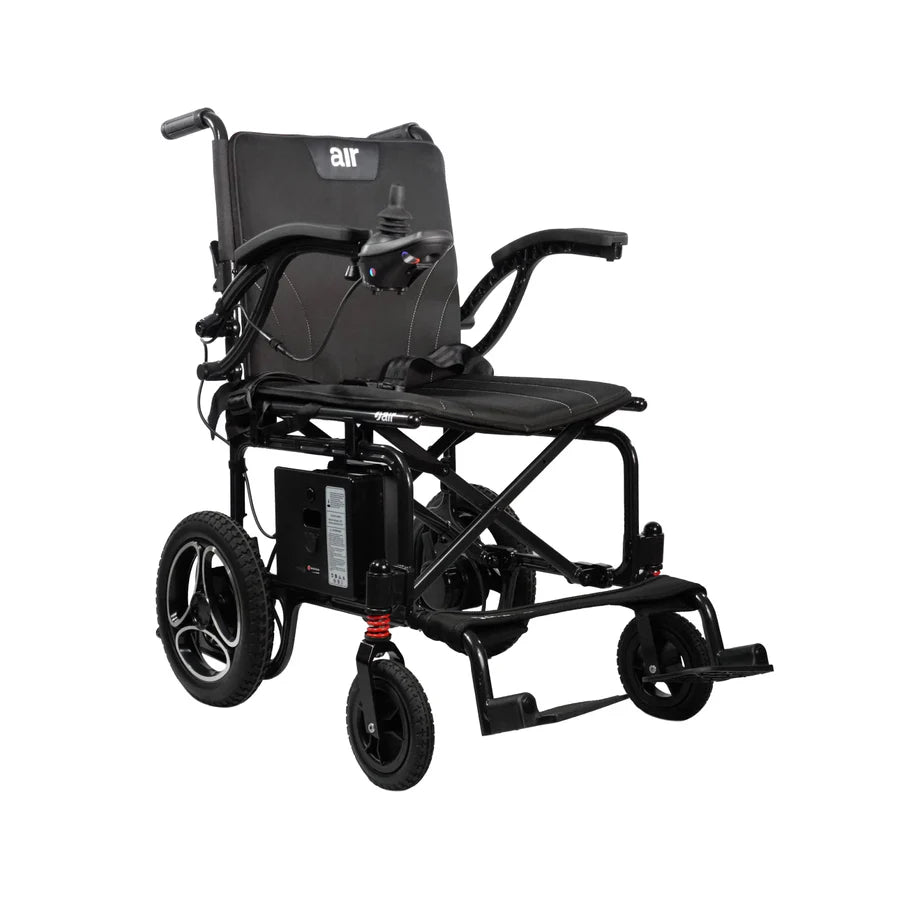
The Journey Air 2026 is built for seniors on a fixed income who still want genuine electric mobility rather than a stripped-down compromise.
Key Specs:
-
Weight Capacity: 300 lbs
-
Turning Radius: 35.4 inches
-
Ground Clearance: Not listed
-
Battery Range: 10 miles per charge
-
Top Speed: 3.7 mph
-
Weight Without Battery: 39 lbs
-
Folded Dimensions: 36" L x 34.75" W x 7.4" H
-
Frame: Aircraft grade aluminum alloy
-
Front Wheels: Upgraded 6.5-inch (larger than the previous 6-inch model), thicker memory foam cushion
-
Warranty: 12 months on frame, mechanical, and electrical components; 6 months on battery, tires, and seating
GET THIS IF you want a genuinely capable 300-lb capacity power chair without paying premium pricing for features you won't use.
See Price & Details
Power Chair Buying Checklist
Use this checklist before placing an order, whether you're buying online or in person.
-
Confirm the primary environment. Indoor-only, outdoor-only, or a genuine mix of both.
-
Measure your doorways and hallways. Compare those measurements against the chair's width and turning radius, not just the seat width.
-
Confirm weight capacity with margin. Choose capacity that comfortably exceeds the user's current weight.
-
Check the folded dimensions and heaviest piece weight if the chair needs to travel in a car, plane, or rideshare.
-
Match battery range to a typical day, not just a short errand. Add extra range if daily distance is unpredictable.
-
Check ground clearance and suspension if the chair will ever leave paved, indoor-quality surfaces.
-
Review the warranty terms for the frame, motor, and battery separately, since they're often covered for different lengths of time.
-
Verify delivery and setup details before ordering, including whether assembly is required on arrival.
Power Wheelchairs and Medicare: What to Know Before You Buy
Medicare Part B can help cover power wheelchairs as durable medical equipment, but coverage isn't automatic and depends on meeting specific criteria. According to Medicare's official coverage guidelines, a doctor must document a medical need for the chair for use in the home, and the beneficiary must meet mobility-related conditions that a cane, walker, or manual wheelchair can't safely address.
Because these requirements are specific and change based on individual medical circumstances, don't assume a chair is covered before purchase. Talk with your doctor and a Medicare-enrolled supplier first to confirm eligibility and documentation requirements for your situation.
How to Choose a Power Chair That Actually Fits Your Life
Choosing the right power wheelchair for elderly users or first-time buyers isn't about finding the chair with the most features. It's about matching turning radius, ground clearance, weight capacity, and portability to the specific rooms, sidewalks, and trips that make up your actual week.
Start with where the chair will spend most of its time, confirm your doorway and hallway measurements, and use the checklist above before comparing prices. That match, not the longest spec sheet, is what makes the purchase pay off.
Frequently Asked Questions
How do I choose a power chair?
Start with where you'll use it most: indoors, outdoors, or both. From there, match turning radius and ground clearance to your space, weight capacity to the user, and battery range to a typical day. The Journey Zoomer covers the widest range of everyday situations if you're unsure where to start.
What is the best power chair for seniors?
It depends on the environment. The Journey Zoomer works well as an all-around option, the Shoprider Smartie suits indoor-only use, and the Shoprider 6Runner 10 handles outdoor and uneven terrain better than lighter models.
What is the best power wheelchair for elderly travelers?
The Journey Air Elite is built for travel specifically, weighing just 26 lbs without the battery and meeting FAA compliance for air travel.
How much weight capacity do I need in a power wheelchair?
Choose a capacity that comfortably exceeds the user's current weight, not one that matches it exactly. Most portable power chairs range from 240 to 300 lbs of capacity.
Does Medicare cover power wheelchairs?
Medicare Part B can cover power wheelchairs as durable medical equipment when a doctor documents medical necessity, but coverage depends on individual criteria. Confirm eligibility with your doctor and a Medicare-enrolled supplier before purchasing.
What is the difference between an indoor and outdoor power wheelchair?
Indoor power chairs have lower ground clearance and are built for smooth flooring and tight turns. Outdoor and all-terrain power chairs have higher ground clearance and suspension built to handle grass, gravel, and uneven sidewalks.


