📋 KEY TAKEAWAYS
- Shopping for a procedure chair for your practice and not sure where to start? You're not alone. Dermatology, aesthetics, outpatient clinics, podiatry, and other specialties all use procedure chairs differently, and the wrong pick can slow down your workflow every single day.
- There's no single "best" procedure chair. The right one depends on the procedures you perform and how your team's workflow moves through the room.
- The right chair balances patient comfort, practitioner access, positioning, cleaning, and durability. Leaning too hard on one factor usually means shortchanging another.
- Electric procedure chairs give you Trendelenburg positioning and hands-free adjustment, which matters most for practices doing minor surgical or aesthetic procedures.
- Cleaning, weight capacity, and available space are easy to overlook during a demo but expensive to get wrong after purchase.
-
Recommended picks:
-
Lemi Monza — compact stationary or mobile power chair for dermatology, ENT, and oral surgery
-
Lemi Dreamed — space-efficient power chair with fold-away armrests for diagnostics and minor procedures
-
Lemi Tesera — mobile, high-capacity chair built for aesthetic surgery and dermatology
-
Lemi 4 — fully electric multi-specialty table with precise degree-by-degree positioning
Bottom Line: If your practice performs a narrow range of procedures with predictable positioning needs, a compact electric chair like the Monza or Dreamed will likely cover you. If you're running a multi-specialty practice or need higher weight capacity and finer positioning control, the Tesera or Lemi 4 is worth a closer look.
The procedures you perform should drive every other decision on this list. A dermatology practice doing biopsies and excisions needs different access and positioning than an aesthetic practice doing longer cosmetic treatments, and both differ from a podiatry or diagnostic setup.
Chairs designed with a tapered backrest improve access to the patient's upper torso, face, and scalp, which matters for dermatology, ENT, oral surgery, and ophthalmology work. Chairs with extra-thick mattresses and extended positioning matter more for practices running longer aesthetic or cosmetic sessions where patient comfort over time is the priority.
Before comparing specific models, list out your most common procedures and the positions each one requires. That list becomes your filter for every other factor below.
1.Look for Adjustable Patient Positioning
Patient positioning is where electric procedure chairs earn their keep. Motorized height, backrest, legrest, and Trendelenburg adjustment let you reposition a patient in seconds using a hand control or foot pedal, without manually cranking a lever mid-procedure.
Trendelenburg positioning (tilting the patient's head below their feet) is a standard feature across today's electric procedure chairs and matters for certain minor surgical and diagnostic procedures. Auto Return and SYNC functions, which restore a chair to a saved position or move the backrest and legrest together, cut down on repositioning time between patients.
Some chairs also offer interchangeable or adjustable head and foot sections, which adds flexibility if your practice handles a wider variety of procedure types. The more procedures you perform in a single chair, the more this kind of adjustability pays off.
2.Prioritize Practitioner Ergonomics
Patient comfort gets most of the attention in procedure chair marketing, but practitioner ergonomics affects your team's health and efficiency every single day. A chair that forces awkward reaching or bending during a procedure will slow down your staff and increase fatigue over a full patient schedule.
Look for a low minimum height that allows barrier-free patient access and easier transfers in and out of the chair. A 180-degree swivel base also helps here, letting the practitioner reposition around the patient instead of the other way around.
Side accessory rails on the base and backrest let you mount instrument trays, lighting, or other tools exactly where your team needs them, which reduces unnecessary movement during procedures.
3.Choose a Chair That's Easy to Clean
Infection control is non-negotiable in any clinical setting, and your procedure chair sees more turnover between patients than almost any other piece of equipment in the room. According to the CDC, noncritical medical equipment surfaces, the kind that can become contaminated and contribute to spreading infections between patients, should be disinfected with an EPA-registered disinfectant.
Look for seamless anatomical mattresses, which eliminate seams where fluids or debris can collect. Antimicrobial vinyl upholstery that resists bacteria, fungus, and mold, and that's rated fire-retardant, gives you an added layer of protection without complicating your cleaning routine.
Most procedure chair upholstery in this category is cleaned with a soft soapy cloth and a clean water rinse. Confirm the cleaning method with your specific model before adding any new equipment to your infection control protocol.
4.Don't Overlook Weight Capacity and Stability
Weight capacity is easy to skip past during a demo, but it directly affects which patients your practice can safely accommodate. Not every procedure chair publishes a maximum weight capacity, so this is worth confirming directly before you buy, especially if your practice serves a bariatric patient population.
Stability matters just as much as the capacity number itself. A wider base, a heavier overall frame, and a solid electric actuator system all contribute to how steady a chair feels during positioning changes, particularly at extended height or Trendelenburg angles.
Durability is closely tied to stability, and it's worth checking how a manufacturer backs its frame construction over time. Warranty terms are a useful proxy here. Some procedure chairs separate their warranty coverage by component, for example offering multi-year coverage on the electrical system alongside longer coverage on the metal frame itself, which signals more confidence in long-term frame durability than a single blanket warranty does.
If weight capacity and stability are a top priority for your practice, ask for the published maximum weight capacity in writing rather than assuming it matches a similar-looking chair.
5.Decide Whether You Need a Mobile Procedure Chair
Some practices run every procedure in the same room, and a stationary chair works fine. Others move patients between rooms, or need to reposition equipment for cleaning, storage, or space efficiency, and that's where a mobile procedure chair becomes worth the investment.
Mobile procedure chairs typically come standard with locking casters for easy movement and secure placement once positioned. Some stationary chairs also offer a mobile upgrade path, adding a caster and braking system without switching to an entirely different model.
If your practice layout involves multiple procedure rooms sharing equipment, or if you anticipate reconfiguring your space down the road, prioritize a chair with mobility built in or available as an upgrade.
6.Consider Available Space
Procedure room size varies enormously from practice to practice, and your chair needs to fit the room you actually have, not the room you wish you had. Compact footprint chairs are built specifically for smaller procedure and day surgery rooms, while larger tables built for extended patient length or higher weight capacity naturally take up more floor space.
Measure your available space before comparing models, and pay attention to both the footprint and the fully extended height range, since a chair raised to its maximum height needs vertical clearance too. A chair that looks compact in a photo can still be too large for a tight procedure room once you account for its full range of motion.
7.Patient Comfort Matters Too
Practitioner efficiency and infection control matter, but the patient still has to be comfortable enough to hold still, especially during longer procedures. Extra-thick memory foam mattresses make a noticeable difference for aesthetic and cosmetic treatments that can run considerably longer than a quick biopsy or diagnostic exam.
Fold-away armrests improve comfort and accessibility for patients getting in and out of the chair, particularly for practices serving older patients or those with limited mobility. Smooth, quiet electric actuators also matter here. Jerky or noisy positioning changes can make patients anxious mid-procedure, which works against the calm environment most practices are trying to create.
Electric vs. Manual Procedure Chairs
| Factor |
Electric Procedure Chair |
Manual Procedure Chair |
| Positioning speed |
Motorized adjustment in seconds via hand or foot control |
Manual crank or lever, slower to adjust |
| Trendelenburg positioning |
Commonly available |
Often limited or unavailable |
| Hands-free operation |
Yes, via foot pedal |
No |
| Upfront cost |
Higher |
Lower |
| Best for |
Practices with frequent repositioning or minor surgical procedures |
Practices with simple, infrequent positioning needs |
| Maintenance |
Electric actuators require occasional servicing |
Fewer moving parts to maintain |
Which Procedure Chair Is Right for Your Practice?
| Practice Type |
Look For |
| Dermatology Practices |
Tapered access for facial and scalp procedures, low minimum height, antimicrobial easy-clean upholstery |
| Aesthetic/Cosmetic Practices |
Extra-thick comfort mattress, extended positioning options, mobility for multi-room workflows |
| Outpatient Surgery Centers |
Higher weight capacity, precise degree-by-degree positioning control, durable frame construction |
| ENT, Ophthalmology & Dental Practices |
Interchangeable or articulating headrests, compact footprint, barrier-free low height |
| Podiatry & Diagnostic Practices |
Compact footprint, simple electric controls, easy-clean seamless surface |
| Multi-Room or Multi-Provider Practices |
Standard casters or an available mobile upgrade path |
See Our Procedure Chairs Collection
Once you know which factors matter most for your practice, browsing a dedicated procedure chairs collection makes it easier to compare options side by side instead of hunting across multiple sites. Here's a quick look at four Italian-engineered electric procedure chairs available through MedShop Direct.

1.Lemi Monza
is a compact stationary power procedure chair with a tapered backrest for upper torso and head access, a low minimum height of 22.4 inches for barrier-free patient transfers, and Auto Return and SYNC functions for efficient repositioning. It's built for outpatient surgery centers, dermatology, oral surgery, plastic surgery, aesthetics, ENT, ophthalmology, and dental practices, and it's available in a stationary configuration or upgraded to the Monza Move with casters and a braking system for mobility between rooms.
GET THIS IF you need a compact, budget-conscious electric chair for dermatology or ENT work and want the option to add mobility later.
See Price & Details

2.Lemi Dreamed
The Lemi Dreamed shares the Monza's tapered access and compact footprint, and adds built-in fold-away armrests for extra patient comfort.
It carries a notably strong warranty structure: 2 years on the electrical system, 5 years on the mattress, and 10 years on the metal frame. It's designed for dermatology, diagnostics, ENT, dental, ophthalmology, and minor surgical procedures
GET THIS IF ou want a space-efficient electric chair with long-term frame warranty coverage for diagnostic or minor procedure work.
See Price & Details
3.Lemi Tesera
The Lemi Tesera stands apart with an extra-thick memory foam mattress, a 180-degree swivel base, and easy-lock casters standard rather than as an upgrade. Its mattress extends from 74.8 to 90.5 inches and it carries a published maximum weight capacity of 441 lbs, the highest listed capacity of the four chairs in this lineup. It's built for aesthetic surgery, dermatology, and advanced medical treatments.
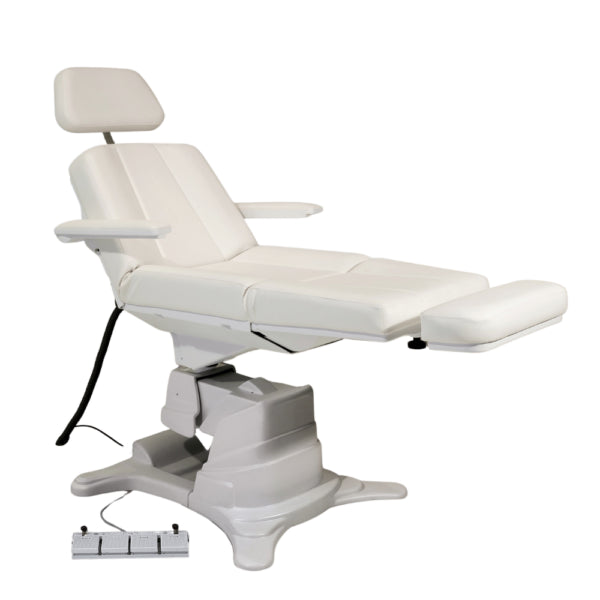
GET THIS IF your practice runs longer aesthetic or cosmetic procedures and needs a mobile chair with strong weight capacity and extended patient length.
See Price & Details

4. Lemi 4
The Lemi 4 is a fully electric procedure chair/table with four independent actuators, an adjustable and removable Bi-Zak headrest, and precise positioning specs: 25 degrees of Trendelenburg, 75 degrees of backrest adjustment, and 65 degrees of legrest adjustment.
Its maximum weight capacity is listed at 440 lbs. It's designed for general procedures across dermatology, plastic surgery, aesthetics, ENT, oral and maxillofacial surgery, and dental applications
GET THIS IF your practice covers multiple specialties and needs precise, well-documented positioning control alongside solid weight capacity.
See Price & Details
Final Considerations Before Buying a Procedure Chair
- Confirm the maximum weight capacity in writing, especially if it's not listed on the product page
- Measure your procedure room, including vertical clearance at full chair height
- Decide upfront whether you need mobility now or might need it later
- Ask about the cleaning method and upholstery material to match your infection control protocol
- Match head and foot positioning options to your most common procedures, not just your busiest one
- Check warranty coverage on the electrical system, mattress, and frame separately, since they often differ
Frequently Asked Questions
What should I look for in a procedure chair for my medical practice?
Start with the procedures you perform most often, then prioritize positioning needs, practitioner ergonomics, ease of cleaning, weight capacity, and available space. The right procedure chair depends on your specific workflow rather than a single "best" model.
What's the difference between an electric and manual procedure chair?
Electric procedure chairs use motorized actuators for height, backrest, legrest, and Trendelenburg positioning, adjustable with a hand control or foot pedal. Manual procedure chairs rely on cranks or levers and typically offer fewer positioning options, especially for Trendelenburg.
What kind of procedure chair works best for a dermatology practice?
Dermatology practices generally benefit from a chair with tapered backrest access for facial and scalp procedures, a low minimum height for easy patient transfers, and antimicrobial, easy-to-clean upholstery for frequent turnover between patients.
Do I need a mobile procedure chair or is stationary enough?
If every procedure happens in the same room, a stationary chair is usually sufficient. If your practice moves patients or equipment between rooms, a mobile chair with locking casters, or a stationary model with a mobile upgrade option, saves time and reduces strain on staff.
How much weight capacity should a procedure chair have?
It depends on the patient population your practice serves. Confirm the manufacturer's published maximum weight capacity directly, since not every procedure chair lists this figure, and don't assume capacity based on a chair's appearance or size.


